
Gynaecomastia: What it is, benefits and results
What is GInecomastia?
The Gynaecomastia is characterised by an excess of skin, fat and mammary gland, unilateral or bilateral in men. It appears in adolescence or adulthood and has an incidence of around 32% of men. Around 65% of adolescent boys are affected and in 75% of cases it is bilateral.
In the majority of cases, this is an idiopathic problem (i.e. with no known cause), but in many other cases there are multiple associated factors, namely physiological (in the neonatal period, adolescence and old age, associated with decreases in testosterone levels), pathological (associated with cirrhosis, adrenal tumours, hyperthyroidism, hypogonadism, testicular tumours) and pharmacological (associated with the use of marijuana and steroids and some drugs such as calcium channel blockers, spirinolactone, cimetidine and ketoconazole).
The presence of gynaecomastia is not associated with an increased risk of breast cancer in men.
Diagnosis
of Gynaecomastia
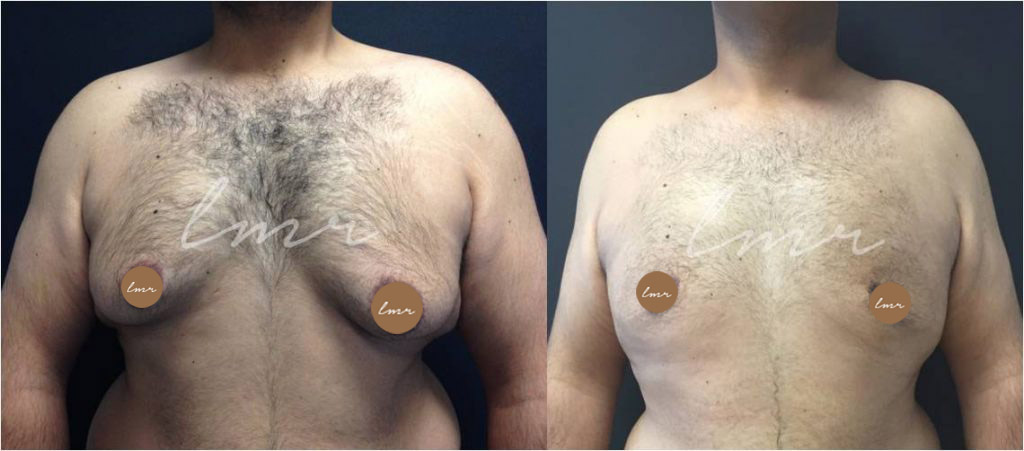
To make the diagnosis of gynaecomastia, In the case of gynaecomastia, we have to assess the presence of predominantly glandular or adipose (fat) enlargement, the presence or absence of masses, the quality of the skin, the degree of ptosis (whether or not the breast is sagging), the positioning and size of the nipples and areola and existing asymmetries. Typically, a classification of four degrees of gynaecomastia is considered, ranging from grade 1 (mildest, with minimal hypertrophy and no ptosis) to grade 4 (most severe, with a volume of more than 500 grams and marked ptosis).


Characteristics of ideal candidates
for male breast reduction surgery
Ideal candidates for the treatment of gynaecomastia usually have the following characteristics:
- Increased breast volume;
- Excess skin (breast ptosis);
- Enlarged areolas;
- Patients without any adjacent causes (e.g. tumours, drugs, consumption of certain substances such as hormones or cannabis).
- Healthy;
- Non-smokers;
- No excess weight/stable weight;
- Emotionally mature;
- Realistic expectations.
Surgery Procedure
of Gynaecomastia
Your Gynaecomastia consultation

Counselling
The first step in your gynaecomastia consultation, é a detailed assessment of the breast, state of health and lifestyle. The surgical plan will be outlined after the medical diagnosis, which is confirmed with a breast ultrasound;

Simulation with Vectra 3D
Vectra 3D XT allows you to create a simulation so that you can get an idea of the result that can be achieved with the surgery;

Detailed explanation
During your gynaecomastia consultation, you will be presented with a personalised treatment plan and the risks, pre- and post-operative care and results you can expect will also be explained;

Budget
After the medical consultation, you will be given an exact quote for gynaecomastia treatment. The cost of the surgery depends on whether it's a case of excess fat, a mammary gland or both.
What results can I expect
After the surgery?
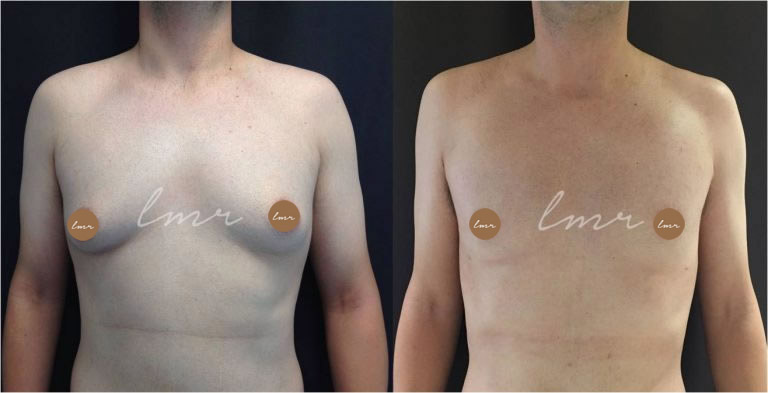
The treatment of gynaecomastia has a major impact on the patient's quality of life and self-esteem. The result can vary from person to person and depends on the anatomical characteristics, the density of the existing breast tissue and the elasticity of the skin covering the breast. The results of gynaecomastia treatment are usually very obvious, the breast becomes flatter and is no longer visible to the naked eye through clothing. Patients who undergo treatment report a significant improvement in confidence, self-esteem and the way they relate to each other. The result of the surgery is definitive, but can be affected by weight variations, hormonal problems, medication, supplements and the natural ageing process.
Type of Anaesthesia
Surgery to treat gynaecomastia is usually performed under sedation and local anaesthesia. The type of anaesthesia is always defined by the anaesthetist according to the combination of procedures to be performed and the clinical history of each patient. Sedation is administered intravenously so that the patient falls asleep and doesn't notice anything throughout the surgery. Then, when the patient is asleep, local anaesthetics are administered so that they don't feel any pain during the surgery. The anaesthetist will be present throughout the operation for the patient's comfort and safety.
TYPE OF INCISION - SICKNESS
One of the issues that most concerns patients is the appearance of the scar. If it's a case of liposuction, the scars are very small, practically unnoticeable (just enough for the insertion of a very thin cannula). In the case of excess mammary glands and/or ptosis, the scar is in the transition zone between the areola and the skin of the breast (the size varies according to the amount of tissue/skin to be removed).
Treatment of Gynaecomastia
The aim of gynaecomastia treatment is always to reduce the size and reshape the male breast. When the increase in breast volume is of unknown cause, it often regresses after 3 to 18 months. In cases where the increase in volume has been present for more than twelve months, it rarely regresses and treatment is necessary. Obese patients are advised to reduce their weight before having surgery. Other patients can be treated with surgery after any underlying causes have been properly eliminated (e.g. tumours, drugs, consumption of certain substances such as hormones or cannabis).
Surgical treatment for gynaecomastia can be carried out using two techniques, either alone or in combination: liposuction and reduction surgery.

Liposuction
When the breast volume present is of an adipose nature (fat). Through a practically invisible incision, liposuction allows the fat accumulated in the breast to be removed, thus removing the unwanted volume.

Reduction surgery
In cases where there is excess mammary gland, the breast tissue is removed through an incision through the areola in order to remove the volume and correct any ptosis that may exist.
3D simulation of Gynaecomastia
We were the first clinic in Portugal to make real-time simulation available to our patients.
In your Gynaecomastia consultation, the VECTRA 3D XT is used so that you can visualise the before and after of your surgery in real time:
- The Vectra XT 3D system has 12 digital cameras;
- Captures images at 180º and at different angles;
- It builds a three-dimensional model of the patient “before surgery”;
- It allows you to manipulate the image and simulate the possible outcome of the surgery;
- It enables clear communication between the plastic surgeon and the patient.

Gynaecomastia step-by-step
Marking the standing patient
The markings are made with the patient standing so that the areas to be treated can be correctly visualised;
Sedation
Sedation is administered intravenously by the anaesthetist, who will be present throughout the surgery;
Local anaesthesia
The local or epidural anaesthetic is injected into the area to be treated while the patient is asleep;
Disinfection
The area to be operated on is cleaned and disinfected to reduce the risk of infection. Operating drapes are placed to isolate the area from the external environment;
Liposuction
If it's a case of excess fat on the chest, a cannula is inserted which, through a vacuum system, sucks the fat out;
Excision
An incision is made when there is excess mammary gland, skin or there is a need to reduce the size of the areolas or reposition the nipple;
Closing the incisions
The incisions are closed with small stitches that are usually removed after 7 days,
Surgical glue
The glue is applied to the scars (in the case of the excision technique) so that they are isolated from the external environment. The glue does not require dressings and gradually falls off after 15 days;
Recovery
Before being transported to the recovery room, a compression waistcoat is put on and worn day and night for 30 days. The patient is woken up by the anaesthetist and then transported to the recovery room where they remain under medical observation until they are discharged.
Preparation for Gynaecomastia

Before surgery
- Carry out all the preoperative tests requested and send them in as early as possible;
- Do not take anti-inflammatory drugs or aspirin in the 10 days before surgery to reduce the risk of bleeding. You should inform the medical team of any medication you take or medical condition you suffer from;
- Do not take slimming medication for one month before surgery;
- Do not smoke one month before surgery or after surgery, while healing is taking place. Smokers have a higher risk of complications, particularly difficulties with healing and tissue vascularisation.
- Read the documentation provided before the surgery carefully, as doubts may arise;
- If you fall ill or feel unwell in the days leading up to the surgery, you should inform the medical team immediately;
- If you have young children, organise your routines and you'll need help at home, especially during the first week;
- Do you have any questions about the surgery, pre- or post-surgery? Don't wait until the last day and ask all your questions in advance.

On the day of surgery
- The day before, you should eat light meals that don't cause indigestion. From midnight on the day before the operation, you should be fasting - no eating or drinking liquids, including water;
- Shower with disinfectant gel the day before and the day of surgery to prevent infection;
- Bring comfortable/large clothes to wear when you are discharged (preferably with a zip or buttons);
- You will not be able to go home alone or drive. If you don't have someone to pick you up from the clinic or help you at home during the first few days, you must inform us before the day of the operation. You should always be accompanied for the first 48 hours;
- You should plan your social and professional life in such a way as to guarantee complete rest in the days following surgery.

Recovery and post-operative care
- The recovery period depends on the individual, but is on average 2 to 3 weeks;
- Take all the medication provided in the prescribed doses and at the prescribed times;
- Rest as much as possible, especially during the first week, and gradually return to your routine. You shouldn't always lie down or be in the same position and you should take short walks to promote circulation;
- Wear the vest/elastic band all day for the first month;
- Avoid moving your arms too much;
- Avoid any kind of exertion for the first 8 days. You should limit your physical activity until 4 weeks have passed;
- Apply ice, constantly renewing it during the first 72 hours after the operation. This is the most important measure to prevent bruising and reduce oedema;
- Avoid sun exposure;
- No smoking;
- Eat a balanced, healthy diet and keep well hydrated by drinking plenty of fluids;
- After five days, you should start lymphatic drainage massages, which are essential for controlling oedema and healing the tissues properly;
Benefits of Surgery Male Breast Reduction
The treatment of gynaecomastia has a major impact on the patient's quality of life and self-esteem. The result can vary from person to person and depends on the anatomical characteristics, the density of the existing breast tissue and the elasticity of the skin covering the breast. The results of gynaecomastia treatment are usually very obvious, the breast becomes flatter and is no longer visible to the naked eye through clothing. Patients who undergo treatment report a significant improvement in confidence, self-esteem and the way they relate to each other. The result of the surgery is definitive, but can be affected by weight variations, hormonal problems, medication, supplements and the natural ageing process.
Male breast reduction surgery offers patients a number of benefits. Advantages include:
- More masculine and harmonious body contour;
- Better posture;
- Increased confidence and self-esteem;
- Better quality of life;
- Performing physical activity more comfortably;
Medical Specialists

About
Dr Alice Varanda Pereira / Plastic Surgery
DOCTORS' ASSOCIATION: registration no. 47051, specialist in Reconstructive and Aesthetic Plastic Surgery and Subspecialist in Aesthetic and Cosmetic Medicine.
Graduated by Lisbon Medical School, It was at this institution that she took her Master's degree in Human Sexuality and is currently working on her PhD.
She has been a member of the faculty's teaching staff since 2008, as Assistant Professor at the Institute of Anatomy. It is in this unit that she produces most of her research projects, essentially in the area of surgical anatomy, and she is also the supervisor of master's theses.



About
Dr Mariana da Rocha Martins/ Plastic Surgery
DOCTORS' ASSOCIATION: registration no. 55124, specialising in Reconstructive and Aesthetic Plastic Surgery.
He graduated from Abel Salazar Institute of Biomedical Sciences at the University of Porto and completed his speciality in Plastic, Reconstructive and Aesthetic Surgery at the University Hospital Centre Lisboa Central - St Joseph's Hospital.
During her specific training in Plastic Surgery, she worked at internationally renowned institutions such as the Kaplan Institute (Barcelona), in La Clinic (Montreux) and Great Ormond Street Hospital (London).

About
Dr Marta Gouveia Duarte/ Plastic Surgery
DOCTORS' ASSOCIATION: registration no. 57817, specialising in Reconstructive and Aesthetic Plastic Surgery.
Graduated in Medicine from School of Health Sciences, University of Minho, where she completed her Master's thesis in Human Ageing.
He completed his speciality in Plastic, Reconstructive and Aesthetic Surgery at the Centro Hospitalar de Lisboa Central - Hospital de São José.
Collaborates in various research projects in NOVA Medical School.

About
Dr Sara Carvalho / Plastic Surgery
DOCTORS' ASSOCIATION: registration no. 60781, specialising in Reconstructive and Aesthetic Plastic Surgery.
Graduated by Lisbon Medical SchoolShe completed her speciality in Reconstructive and Aesthetic Plastic Surgery at the Centro Hospitalar Lisboa Central - Hospital de São José.
She has taken various courses in aesthetic and reconstructive surgery of the breast and aesthetic surgery of the face.
She is currently a member of the clinical staff of the Reconstructive and Aesthetic Plastic Surgery service at the Centro Hospitalar Lisboa Central, where she excels in the areas of Breast Reconstruction, Body Contouring and Post-Bariatric Surgery, Paediatric Plastic Surgery, Trauma and Burn Surgery. She works as a hospital assistant, is a training supervisor and is responsible for Safe Surgery at the institution.

About
Dr Filipa Oliveira/ Plastic Surgery
DOCTORS' ASSOCIATION: registration no. 59147, specialising in Reconstructive and Aesthetic Plastic Surgery.
Graduated in Medicine from Faculty of Medicine, University of Porto, where she completed her master's thesis on paediatric scars.
She holds a doctorate in medicine from the University of Münster in Germany.
After completing her speciality, she became a Senior Graduate Assistant (Oberärztin) at the Fachklinik Hornheide and the University of Münster. She is currently collaborating on various research projects at the University of Münster, where she is supervising doctoral students. Dr. Filipa is also a regular correspondent for scientific and leisure magazines in Germany.


Frequently Asked Questions about
Male Breast / Gynaecomastia
Is gynaecomastia surgery safe?
Yes, surgery is safe as long as it is carried out in an accredited clinic and by a reconstructive and aesthetic plastic surgeon who is registered with the Portuguese Medical Association and has many years of experience in this type of intervention. It is also important to have medical examinations carried out and to strictly follow pre- and post-operative care.
What is the price of gynaecomastia surgery in Lisbon (Portugal)?
When it comes to the cost of gynaecomastia, each case is different. The cost of surgery depends on whether the reason for the gynaecomastia is excess fat, excess mammary glands or both. The exact price of gynaecomastia surgery is confirmed after the diagnostic medical consultation.
At what age does gynaecomastia usually appear?
Male breast enlargement is more frequent at certain stages of life. The highest number of cases of gynaecomastia is found in adolescence, with an incidence of 65% of 14 to 15 year olds. However gynaecomastia can appear at any age, as it can have different causes.
Can gynaecomastia be cured?
Since most cases of gynaecomastia is of unknown origin, surgery is the best treatment option, and in these cases there can be talk of a cure. Generally speaking, if you treat the underlying cause, you can talk about gynaecomastia cure.
Will the scars disappear?
The scars from gynaecomastia surgery are permanent, but they are so small that they are well disguised. Over time, they become thinner and lighter in colour. The final appearance of the scars varies and depends on each patient's genetic characteristics and post-operative care. The final result of the scars is expected after 12/18.
Will I need drains?
Normally, when only liposuction is performed, no drains are used. In other cases, drains will be placed whenever necessary and removed after 48 hours.
How painful is the recovery?
Recovery from gynaecomastia surgery can take around two weeks. In the first few days, it's normal to feel tired, uncomfortable and in moderate pain. It's important to follow all the doctor's recommendations to the letter, respect the rest period and take the prescribed medication to relieve the pain and have a more peaceful recovery.
When can I resume physical activity?
You shouldn't carry out any physical activity or exertion for 30 days, but you can resume activities gradually. All the precautions taken during the recovery period must be adhered to because, as well as contributing to a speedy recovery, they also help to achieve better results.
Are the results visible immediately after surgery?
The result of gynaecomastia surgery is visible immediately after the operation. However, for some time, swelling will distort the result. After three months you can get a very real idea of the result, but the final result is usually expected after 6 to 12 months.
Can gynaecomastia return after surgery?
The results of gynaecomastia surgery are long-lasting and permanent if there are no adjacent untreated causes. On the other hand, if after surgery the patient gains weight or develops any health problem that causes the appearance of gynaecomastia, it could compromise the outcome of the surgery.
What are the risks and complications of surgery?
Like any other surgical procedure, gynaecomastia surgery is not without its risks and complications (e.g. reaction to anaesthesia, infection, haematoma, changes in skin sensitivity, asymmetry, delayed and unsightly scarring, etc). The possible risks and complications of gynaecomastia surgery will be explained in detail during your medical consultation.
What do gynaecomastia scars look like?
If the patient only needs liposuction, the scars will be very small, practically unnoticeable (just enough for the insertion of a very thin cannula). However, in the case of excess mammary glands and/or ptosis, the scar will be in the transition zone between the areola and the skin of the breast. The size of the scar will vary depending on the amount of tissue/skin to be removed.
Can male breasts be treated with weight loss?
In cases where breast enlargement has been present for more than 12 months, it rarely regresses, even with weight loss, so it is necessary to perform male breast correction surgery - gynaecomastia. Patients who are overweight are advised to reduce their weight before having surgery. Other patients can be treated with surgery after eliminating any underlying causes (e.g. tumours, drugs, consumption of certain substances such as hormones or cannabis).