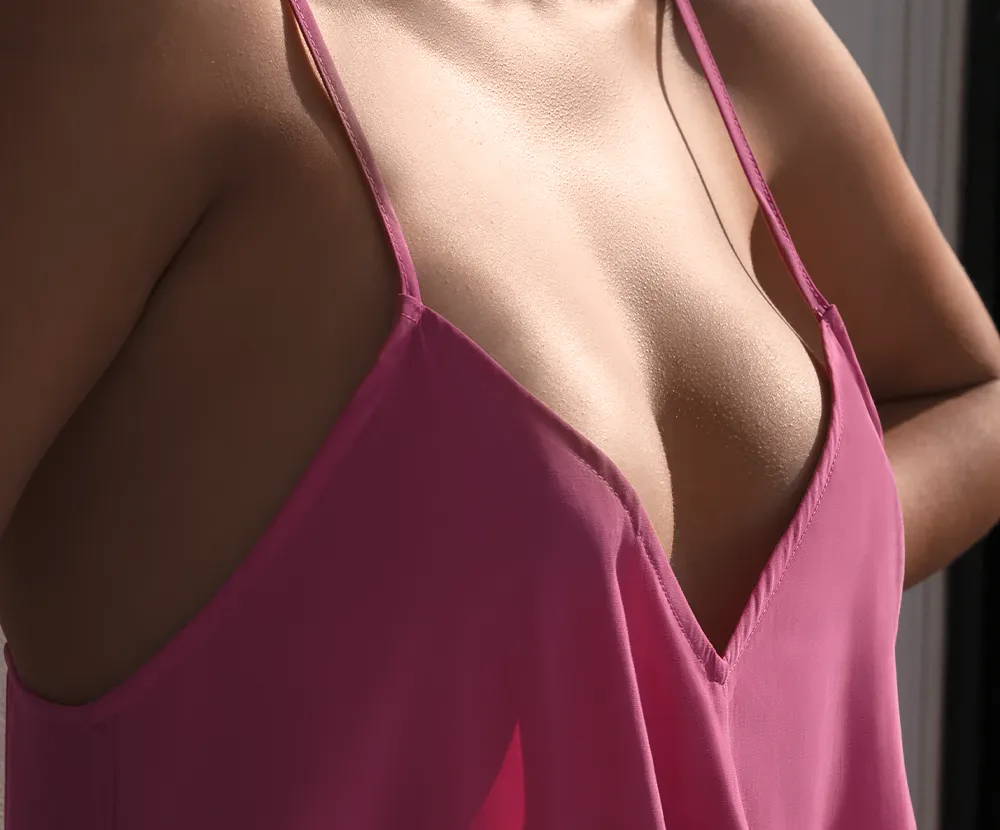
Everything you need to know before having breast augmentation surgery
He's been thinking for a long time having breast augmentation and you feel the time is right? Undergoing surgery is a very important decision in a woman's life, which is why it needs to be well thought out and considered.
Today, you can read a list of 12 important points that you should know before having surgery and that can help you make a more informed decision.
12 truths about breast augmentation
Before reading the article, you can see here our gallery of breast augmentation results with before and after images. We've chosen cases of women with different physical characteristics and with implants of different sizes and shapes so that you can get an idea of the results that can be achieved.
Live breast augmentation by Dr Alice Varanda Pereira
1) Types of scars in breast augmentation surgery
Any breast augmentation surgery is associated with permanent scars. However, with the passage of time, they become more final and clearer. The final appearance of the scars depends above all on the characteristics of each patient's skin and post-operative care. In breast augmentation, there are 2 types of scars:
-
Inframammary scar - FIt is located on the underside, along the fold of the breast. It is the most common scar as it allows for better visualisation of the breast structures and is the one that least interferes with future breastfeeding;
-
Areolar/periareolar scar - It is located at the transition from the skin of the breast to the areolar tissue. It is most commonly used when a woman has a slightly sagging breast and needs to remove some of the skin around the areola. This scar is also used in patients with breast asymmetry and tuberous breasts.
2) The type of anaesthesia used
Breast Augmentation is performed under sedation and local anaesthesia. This means that local anaesthetics will be injected into the area to be operated on, and that you will be sleeping soundly and breathing on your own. After the surgery, you will be under observation for a few hours until you are discharged.
3) The different types of breast implants
There is a wide variety of breast implants for women with different physical characteristics and with different goals regarding the final result.
- Shape: round and drop (anatomical);
- Projection: high, moderate, high and extra high;
- Coating: microtextured and polyurethane;
4) The ideal implant size varies from woman to woman
This is a very common question. Different brands of breast implants offer different sizes that can range from 55 to 1000 cc's and, in some cases, can be custom-made. The most commonly used sizes range from 250 to 400 cc's. However, there is no ideal size that suits all women.
For example, 350 cc implants can look large on a slim patient with a narrow chest, while the same size can look very small on a tall patient with a large frame. During the medical consultation, the plastic surgeon will advise on the ideal size in order to achieve a harmonious and proportional result. A 3D simulation will also be carried out with different implants so that you can simulate the scope of your result.
5) Breast implants don't last forever
When you have a breast augmentation, you should be aware that you may need revision surgery Willingness to reduce or increase the size of the implants after 10 years in the following cases:
- Willingness to reduce or increase the size or shape of the implants
- Changes to the aesthetic appearance of the breast following pregnancy, breastfeeding, weight fluctuations and the natural ageing process
- Capsular contracture
- Implant displacement
6) A breast lift with prostheses may be necessary
If the sagging of the breast is very slight, there is the possibility of achieving a good result with breast implants alone. In cases of more pronounced sagging, it may be necessary to perform a mastopexy to lift the breast and place implants to increase its size.
There are various degrees of breast sagging, related to the position of the nipple and the distribution and position of the mammary gland. These aspects are assessed at the doctor's appointment in order to decide which techniques are most appropriate.
7) Is it possible to breastfeed after a breast augmentation?
The ability to breastfeed is the main concern of women who want to be mums one day and it is true that, although low, there is some risk. Interference with breastfeeding is a possible risk of breast augmentation, but most women who have the surgery are able to breastfeed their babies.
The inframammary incision is the one with the least risk as it doesn't interfere with the ducts responsible for the passage of milk to the outside of the breast. If you're planning to become a mum, it's important to discuss this with your plastic surgeon so that the most suitable techniques can be chosen to preserve the integrity of the areola and ducts.
Dr Luísa Magalhães Ramos talks about how breastfeeding interferes with breast augmentation
8) The price of a breast augmentation varies
One of the most frequently asked questions by women who wish to have this surgery is “How much does breast augmentation cost?”. The price of breast augmentation surgery starts at 3950€. However, there are several factors that can influence the final cost of the surgery:
- Initial characteristics of the breast;
- Complexity of the techniques used;
- Type of breast implants chosen.
- When assessing the final price of the surgery, you should consider everything that is and isn't included in the cost to avoid unexpected costs:
- Operating theatre;
- Medical and nursing staff;
- Anaesthesia;
- Breast implants;
- Surgical bra;
- Track;
- Post-operative medication;
- Lymphatic drainage;
- Nursing care;
- Review consultations.
9) Temporary changes in breast sensitivity are possible
Changes in sensitivity after breast augmentation can occur due to oedema (swelling). However, in most cases, this is only a transitory situation that normalises after a few months.
10) The result you see on the first day is different from the final result
Initially, due to post-operative oedema, the breast may appear larger and higher than desired. Over time, as the swelling subsides, it will look more beautiful and natural. The result of breast augmentation improves progressively up to 12 months, when the final result of the surgery is expected.
11) Not all doctors can perform breast augmentation
Make sure you choose a Plastic, Reconstructive and Aesthetic Surgeon, registered with the Portuguese Medical Association and the Portuguese Society of Plastic, Reconstructive and Aesthetic Surgery, with several years' experience in performing breast augmentation and other breast surgeries and with results proven through before and after photographs.
12) Recovery from breast augmentation is quick
Unlike other surgeries that require several weeks of rest, one of the great advantages of breast augmentation is its rapid recovery. On average, after a week's rest, you can return to work and your routines, as long as they don't involve physical exertion. Strenuous activities can be resumed after 4 weeks.
Book your breast augmentation appointment
During your breast augmentation consultation, you can clarify any doubts you may have about the surgery. You'll be able to try out different implant sizes to see which size you feel most comfortable with. A 3D simulation will also be carried out on the Vectra XT so that you can get a rough idea of the final result of the surgery.