Breast augmentation is a highly sought-after surgery that women are very keen to find out more about. Like any surgery, breast augmentation can also have complications. The possibility of the occurrence of capsular contracture, A complication that can hinder the dreams of women who put on breast implants.
What is capsular contracture?
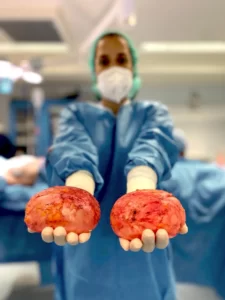
Capsular contracture is defined as a loss of elasticity of the capsule surrounding the implant, a layer of abnormal scar tissue that sometimes forms around breast implants causing discomfort and firmness. It is formed byr tconnective tissue (fibrosis) and is a natural phenomenon after any surgery involving synthetic materials. The body initiates aThe immune system develops an internal scar in the form of several layers over the prosthesis.
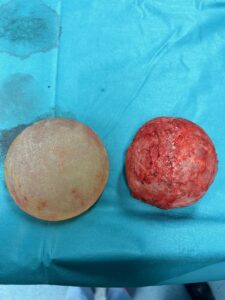
When this reaction is very intense, there is a greater production of fibrosis, which translates into lower elasticity of this capsuleula, This characterises the process of contracture (greater rigidity). As a result, the breast may feel sore and stiff, and the capsule can affect the appearance or shape of the breast, taking on a distorted or asymmetrical form. It is one of the most common problems encountered after breast augmentation and may require additional surgery to repair.
Despite being referred to as the most frequent complication to occur in breast implant surgery, with the development of more modern implants, filled with highly cohesive silicone gel and with a textured or polyurethane surface, the incidence of capsular contracture has fallen dramatically and is currently less than 5% according to different studies. In addition, capsular contractures today tend to be less severe than in the past.
What can cause the body to develop capsular contracture?
After any surgery, the body's defence process naturally takes place, giving rise to the appearance of fibrosis, which is perfectly natural. However, the development of more intense fibrosis and the presence of capsular contracture can be directly related to the quality of the material and the length of time the implant has been in use. The surface of the silicone implant is also a determining factor in the production of capsular contracture.
There are also other factors that are related to the development of capsular contracture, such as
- the presence of infection;
- post-operative complications such as haematomas and seromas;
- intense surgical trauma (major surgeries such as mastectomies);
- implant rupture with silicone leakage into neighbouring tissues (extremely rare with current implants and certified brands);
- the presence of radiotherapy in cases of reconstruction after cancer.
What are the signs and symptoms of capsular contracture?
In most cases of breast augmentation the contraction on the implant is very subtle, causing no symptoms or any other change in the consistency or shape of the implant. But in some cases the capsule contraction is strong and will cause the hardening and distortion of the breastand in more severe cases, pain.
In general, the highest incidence of contracture is seen in milder degrees of discomfort and loss of breast elasticity. In higher degrees, there is hardening and asymmetry between the two breasts, and in more advanced cases there may be pain when resting, limitations in physical activity and loss of aesthetic results.
One American author called Baker classified capsular contracture into four levels in the 1980s according to symptoms and physical examination of the breasts, dividing symptoms into 4 degrees:
- Grade IWomen with no local symptoms and no alterations such as asymmetries or displacements on physical examination. The breasts are soft and there is no discomfort on palpation
- Grade IIThe breast with contracture is less elastic, minor discomfort can occur and the implant can be felt on palpation. Visually there is no change
- Grade IIIThe breast with contracture is harder, the implant can be seen and felt on palpation and there is asymmetry in relation to the other breast.
- Grade IVThe most common problem is the presence of all the alterations of III plus pain and severe asymmetry, with a loss of result.
The diagnosis of capsular contracture is made through observation and palpation of the breasts. However, the surgeon may request complementary tests such as mammography or ultrasound if necessary for diagnosis.
Are there any preventative measures for capsular contracture?
Reducing the risk of developing capsular contracture is the best way to avoid this complication. Certain preventive measures aim to promote the least possible reaction of the implant (synthetic material) with the body.
The use of antibiotics before and sometimes after surgery has also been shown to reduce the risk of capsular contracture. As well as starting gentle massages immediately after surgery, they are highly recommended as they prevent the appearance of capsular contracture.
All the usual post-operative care should be taken:
- relative rest,
- proper nutrition,
- avoiding cigarettes and appropriate dressings in order to favour healing and prevent possible complications.
What is the treatment for capsular contracture?
Mild capsular contractures such as grade I and grade II can be partially improved by non-invasive procedures such as massage and medication. Guided external massage can reduce or even resolve some cases of mild/moderate contracture. Mild cases of capsular contracture without symptoms or visible deformity generally do not require additional surgery.
The most serious cases of contracture, grade III and grade IV, which cause visible or palpable firmness, pain, displacement, implant rupture or deformity usually require additional surgery to treat the problem.
But the best treatment of all is always prevention, taking into account the surgical technique to be used with the aim of less trauma to the body, as well as taking all post-operative care which will largely favour a good healing process and a reduction in the appearance of capsular contracture.
If you are considering a breast augmentation, It's natural that everything raises a lot of questions for you, especially everything that involves the post-surgical period. If you need any clarification, please get in touch with us or book an appointment at the clinic at plastic surgery in the centre of Lisbon, We are happy to answer any questions you may have.